About Plastic Petri Dish
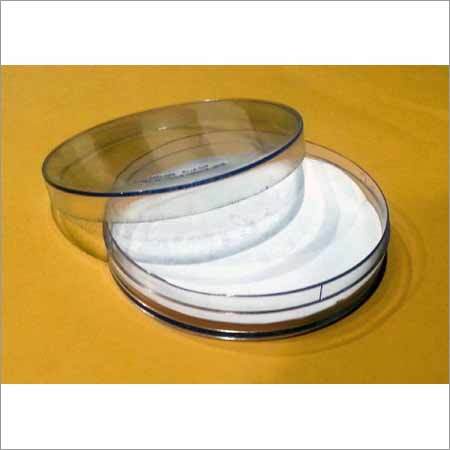
Plastic Petri Dish is widely used in labs to test seed germination. This dish is made with tight lid to retain moisture specifically made for the seed germination testing. The dish is breakage resistant and the filter paper needed are also provided. Offered at market leading rates, our customers can get this Plastic Petri Dish in different sizes as per their requirements.
Convenient and Practical Laboratory EssentialThese injection-molded polystyrene Petri dishes provide a smooth, glossy finish and excellent clarity, making them suitable for a wide range of laboratory and education settings. The stackable, leak-proof design with raised rims and easy-to-remove lids simplifies culture management and storage without risk of contamination. Choose from sterile and non-sterile varieties, tailored for various microbiological procedures.
Reliability You Can TrustWith resistance to mild acids and alkalis and a rigid, robust structure, this single-use Petri dish supports a broad array of biological and chemical applications, maintaining sample integrity throughout. Although not autoclavable, its construction ensures safe and efficient disposal after use, minimizing labor and risk in busy lab environments.
FAQs of Plastic Petri Dish:
Q: How should the disposable plastic Petri dish be used for microbiological culture?
A: To use the Petri dish for microbiological culture, place the appropriate agar or medium in the dish, allow it to solidify, and then inoculate with the sample. The loose-fitting lid helps prevent contamination during incubation and observation.
Q: What are the benefits of the raised rims and stackable design on these Petri dishes?
A: The raised rims and stackable feature make it easier to efficiently store multiple dishes without risk of slipping or contamination, optimizing organization and workflow in laboratory environments.
Q: When should I choose the sterile option over the non-sterile one?
A: Opt for the sterile variant when working with sensitive cultures or clinical samples that demand contamination control. Non-sterile dishes may be used for general laboratory procedures where sterility is not critical.
Q: Where are these disposable Petri dishes best sourced and distributed in India?
A: These Petri dishes are available through a wide network including dealers, exporters, manufacturers, retailers, suppliers, traders, and wholesalers throughout India, ensuring accessibility for different laboratory needs.
Q: What are the limitations of using this Petri dish for laboratory experiments?
A: These Petri dishes are not suitable for high-temperature sterilization, such as autoclaving, and are intended for single use only. They also are not UV resistant and should not be used with strong chemicals beyond mild acids and alkalis.
Q: How does chemical resistance enhance the laboratory application of these dishes?
A: The dishes resistance to mild acids and alkalis ensures they remain durable and free from degradation during most routine culture and testing procedures, providing reliable containment for samples.
Q: What makes these polystyrene Petri dishes advantageous for disposable laboratory use?
A: They are lightweight, rigid, and provide clear visibility of specimens, allowing for thorough observation. Being disposable also reduces risks of cross-contamination and eliminates the need for cleaning and sterilization between uses.






 Send Inquiry


 Send Inquiry